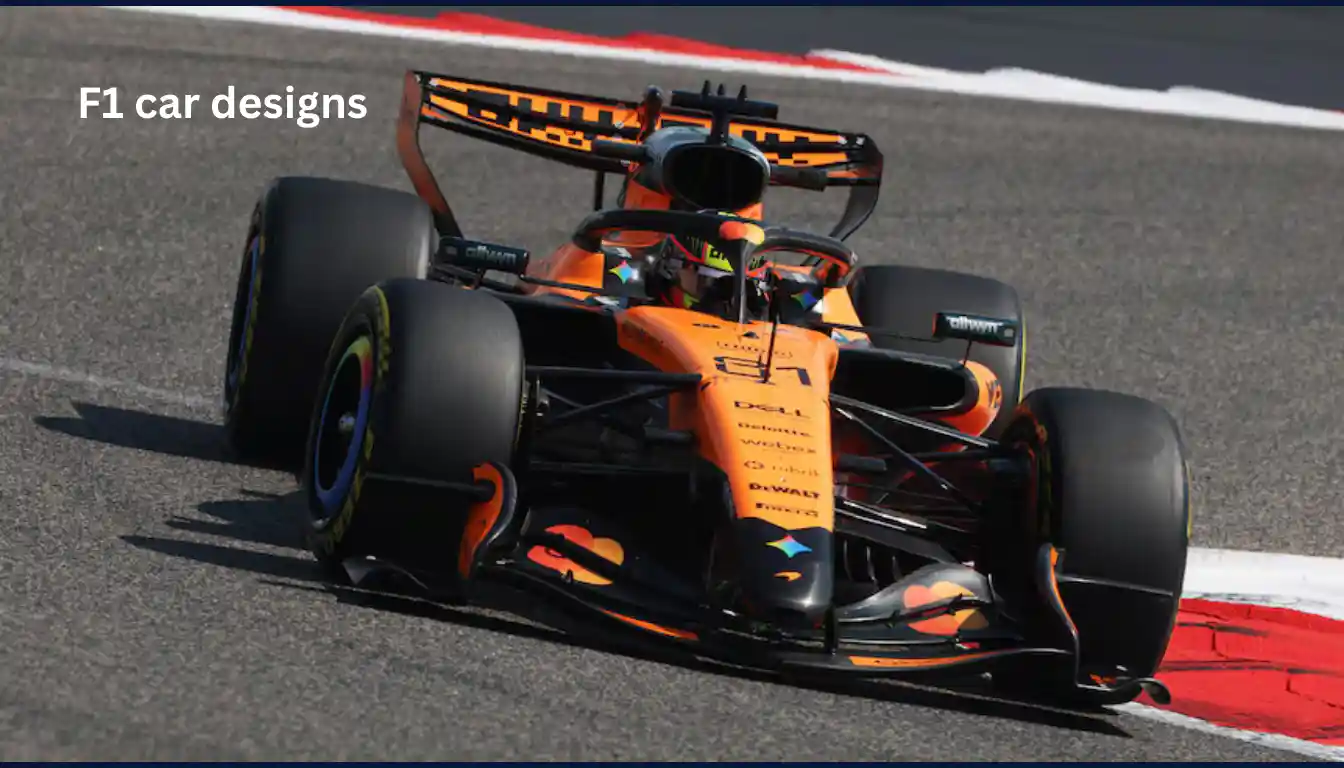
New cars for the upcoming F1 season were being tested in February by drivers, including Australian Oscar Piastri, on a Bahrain track. (Getty Images: Steven Tee)
Formula 1 is back for 2026, and the cars are all sporting new looks.
But it won’t be just a fresh coat of paint on show at the Melbourne Grand Prix.
Former Renault engineer Chris Papadopoulos says this year features one of the biggest regulation changes since the sport’s inception.
“Tyres, aerodynamics, vehicle dimension and engine rules … so basically, just about everything on the car is changing,” he says.
“This is now the most high-stakes, high-technology game of people trying to outdo each other.”
The cars will be louder, slower on the corners and harder to handle, but more sustainable for the planet than previous designs.
Racing teams predict these tweaks may inject a healthy dose of “unpredictability and chaos” into the first race of the season.
So let’s take a look under the ‘hood’ at the science of F1 cars.
The basics of an F1 car
To make sense of the changes it’s important to understand the fundamentals of how an F1 car works.
Bradley Lord, the Mercedes F1 team representative, says an F1 car is fundamentally “the lightest, fastest, strongest, most potent road-going vehicle you could make”.
F1 cars can reach speeds of over 350 kilometres per hour and look a bit like a fighter plane on four wheels.
They still share several similarities with road cars including a power unit that uses both a battery and fuel-powered combustion engine, similar to hybrid vehicles.
But there are also more prominent features of an F1 car’s body like the front and rear wings, side pods, and diffuser (a ramp-shaped rear section).
These elements — especially the wings and floor of the car — work together to keep the car glued to the track instead of lifting off like a plane at high speeds.
This is managed through two key forces: drag and downforce.
Cars are streamlined to limit the amount of drag (air pushing against it) on straight parts of the track to go faster.
While on corners, they can increase drag and downforce (the force of air pushing the car to the ground) to give the tyres more grip.
The shapes, sizes, temperatures, and weights of all the car’s components are set by the governing body, the Federation Internationale de l’Automobile (FIA).
These technical rules mostly tell teams what they can’t do: cars and their engines can’t be bigger than certain sizes, and wings can’t move in a certain way.
F1 car design is an evolutionary arms race where teams try to find the best engineering solution to regulations, according to Mr Papadopoulos, who is now the managing director of Australian racing team Volante Rosso.
“Which is why the rules get revised every now and then, because someone finds a way to do a better job.”
A louder experience
One of the first things spectators will notice this year is the cars will sound different.
“They’re a bit louder and a bit, I’d sort of say throatier. They growl a bit more,” Mr Lord says.
This is because the heat motor generator unit, a heavy and complex piece that acts like a silencer on cars, is gone.
However, the regulations limit how much energy can be recovered during a lap, meaning the teams can’t run the battery flat out every single lap.
“So it’s going to add an element of sort of high speed chess to how the drivers battle on track,” says Mr Lord.
Cars still quick but slower lap times expected
Lap times may be slightly slower this year due to design constraints producing less downforce and drivers braking more to regain energy for their battery.
“[But] in pure acceleration terms, they are quicker. They’re incredibly impressive when you see them coming out of the corners at full power,” Mr Lord says.
The cars can accelerate faster on the straights due to bigger battery capacity, which allows drivers to release more energy.
| Year | Fastest race lap Melbourne | Fastest qualifying lap Melbourne |
|---|---|---|
| 2026 | ? | ? |
| 2025 | 1:22.167 | 1:15.096 |
| 2024 | 1:19.813 | 1:15.915 |
| 2023 | 1:20.235 | 1:16.732 |
| 2022 | 1:20.260 | 1:17.868 |
However, the cars will have 30 per cent less downforce compared to last year.
This means they will need to go slower in the corners so they don’t lose grip and slide.
Mr Lord says the cars are “sliding a little bit more in the corners” so look “more fun and entertaining for the drivers”.
Why will cars be harder to control?
Former Williams engineer Sammy Diasinos says one of the biggest changes contributing to a lack of downforce is the shape of the car’s floor.
“The floor has to be much simpler relative to the previous generation cars, which had hugely complex floors that generated a lot of downforce by having a carefully contoured floor very close to the ground,” he says.
This year, the cars will be higher off the ground, which will force more air underneath the car and increase downforce.