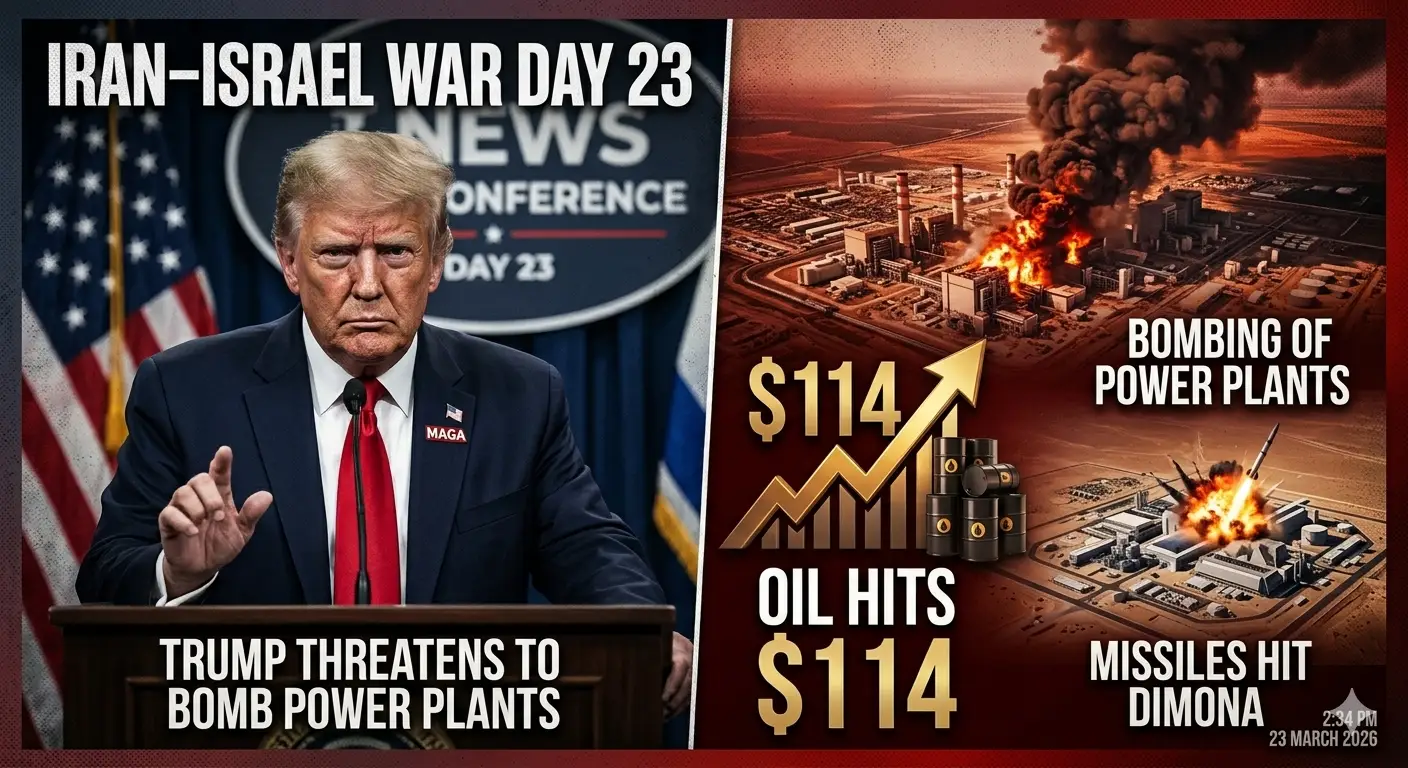
Trump Halts Iranian Power Plant Attacks After Strait of Hormuz Warning
Trade & Inflation Higher energy costs drove inflation and slowed economic activity. Iran’s economy shrank. This happened due to lower trade, lost oil revenue, and damage from military action.
Thank you for reading this post, don't forget to subscribe!President Donald Trump canceled military operations against Iranian power plants. He acted after receiving warnings about risks in the Strait of Hormuz.
The Strait of Hormuz is a key waterway for global oil transport. Conflicts in the region can disrupt oil markets and global trade. . Experts view this as proof that the region struggles to balance diplomacy and military actions.
Why Trump Decided to Halt the Attacks
US intelligence and military advisers warned Trump. They highlighted the risks of attacking Iranian power plants.
A military attack on these facilities would cause two issues. First, it would raise international tensions. Second, it would disrupt global oil distribution. Trump chose a foreign policy to keep diplomatic and economic pressure on Iran. This approach aimed to avoid direct military conflict.
Item United States Impact
- Oil price rise: Brent Crude tops $100 due to tensions in the Strait of Hormuz.
- Oil supply disruption: A global oil shock drives fuel prices higher.
- Stock market effect: US stocks drop amid fears of war.
- Trade & inflation: Rising energy costs push inflation up.
Iran Impact
- Oil price rise: Iran loses oil revenue after disruptions in the Strait.
- Oil supply disruption: Iran’s export revenue drops sharply as oil shipments fall.
- Stock market effect: Sanctions and military costs hurt Iran’s growth and confidence.
- Trade & inflation: Iran’s economy shrinks as trade declines and war damages output.
Impact on Global Oil Markets
The Strait of Hormuz is responsible for nearly 20% of the world’s oil trade. Military conflicts can disrupt supply lines. This often leads to a big rise in oil prices.
The oil markets steadied after Trump’s attacks. Analysts are still keeping an eye on the situation.
Reactions from Iran and the World
Key Points
- Iran welcomed the halt but warned against future attacks.
- International leaders emphasized the need for diplomatic solutions.
- International leaders emphasized the need for diplomatic solutions.
Final Thoughts
Trump’s choice to halt attacks on Iranian power plants shows how complex Middle Eastern politics can be. It also highlights the strategic importance of the Strait of Hormuz.
The US-Iran relationship will be watched carefully. The immediate conflict is on hold, but it will impact global markets and diplomatic ties.
Here’s what happened today
We are closing this live page soon. Here’s a recap of the day’s main developments before we go:
- The White House announced that Trump’s national security team is reviewing Iran’s proposal. This plan aims to reopen the Strait of Hormuz and end the war.
- Russian President Vladimir Putin met with Iran’s foreign minister, Abbas Araghchi, in St. Petersburg. He praised the Iranian people for their independence.
- Israeli army chief Eyal Zamir says Israel needs more soldiers. He believes “2026 is likely to be another year of fighting on” multiple fronts.
- Israeli attacks in southern Lebanon killed four people. Lebanon’s Health Ministry reported that the death toll since March 2 has reached 2,521.
Who Holds the Cards in Iran-US Talks?
Both the US and Iran claim to have the upper hand in negotiations over the war, but who holds the cards? Senior researcher Sultan Al Khulaifi breaks it down.
Iran war News peace talks
As of April 28, 2026, peace talks between the United States and Iran are shaky. Direct negotiations have stalled, so there’s a shift toward regional diplomacy. A two-week ceasefire, mediated by Pakistan, is still in place. However, recent attempts to reach a permanent peace deal have hit major roadblocks.
Recent Developments in Peace Talks
- Cancelled U.S. Envoy Trip: President Donald Trump canceled his trip to Islamabad, Pakistan, over the weekend. This was meant for envoys Jared Kushner and Steve Witkoff. Trump said the U.S. “has all the cards.” He added that Iranian leaders should call him directly if they want to negotiate. He expressed dissatisfaction with Iran’s current terms.
- Iran’s New Peace Proposal: Tehran has sent a new peace plan through Pakistani mediators. A key part of this proposal is to delay nuclear talks. Instead, it focuses on ending the war for good and reopening the Strait of Hormuz.
- Iranian Foreign Minister Abbas Araghchi just wrapped up a fast-paced diplomatic tour. He visited Pakistan, Oman, and Russia. In St. Petersburg, Araghchi met President Vladimir Putin. He said Russia is ready to help with a deal
Key Obstacles to a Deal
- Nuclear Red Lines: The U.S. demands that Iran stop enriching uranium and give up its near-weapons-grade stockpile. Iran has firmly rejected these conditions. They say they won’t negotiate “under pressure, threats, or siege”
- Strait of Hormuz Blockade: The blockade of the Strait of Hormuz is causing a global trade crisis. Oil prices are rising, with Brent crude hitting a three-week high.
- Iran won’t complete a peace agreement unless the ceasefire in Lebanon holds
Iran war News Netanyahu
Prime Minister Benjamin Netanyahu faces strong military and political pressure. The war with Iran, now 60 days in, keeps changing the Middle East.
Recent Military Developments
- Netanyahu has told the IDF to “vigorously attack” Hezbollah targets in Lebanon. He blames the group for ruining a fragile regional truce.
- Aid to the UAE: Israel quietly sent an Iron Dome battery and troops to the UAE. This move aims to intercept hundreds of Iranian missiles and drones.
- Netanyahu sees the conflict as a preemptive win. He believes it has “crushed” Iran’s military. But critics argue the clerical regime is still in power and keeps firing missiles at Israel.
Political Challenges
- Election Threat: Approval ratings are dropping. So, Netanyahu’s rivals, Naftali Bennett and Yair Lapid, have teamed up. They created a new coalition named Together to take him on in the October elections.
- US Relations: Netanyahu and U.S. President Donald Trump are facing increasing tension. Trump has urged Israel to reduce its operations. Some military analysts say Israel is making key decisions in Washington, not in Jerusalem.
Personal Health
Cancer Diagnosis: Netanyahu shared that he hid his prostate cancer diagnosis for two months. He said he delayed sharing this news to stop Iran from using it as “propaganda.”
Trump News
The big news about President Donald Trump is the investigation into a shooting. This event took place at the White House Correspondents’ Dinner (WHCD) on Saturday, April 25, 2026. People view this incident as a third assassination attempt.
WHCD Shooting Investigation
- **Security Incident:** An armed suspect with guns and knives burst into the lobby of the Washington Hilton during the gala.
- Safety Status: President Trump and senior officials were safe. The Secret Service quickly evacuated them.
- **Legal Charges:** The suspect checked into the hotel a day before. Now, he faces federal charges for attempted assassination.
- Security Review: Law enforcement is rethinking security measures for major events. This comes after reports of uneven screening at the dinner. [1, 2, 3, 4]
Foreign Affairs & Diplomacy
- UK State Visit: King Charles III and Queen Camilla are arriving for a four-day state visit to mark the 250th anniversary of U.S. independence
- Iran Conflict: High tensions remain over a U.S. blockade in the Strait of Hormuz. Trump recently extended a ceasefire, but some congressional leaders want to resume strikes
- The planned peace talks with Pakistan were canceled unexpectedly after the WHCD shooting
Domestic Policy & Administration
Judiciary: Reports say the administration may replace Supreme Court Justices Alito and Thomas in 2026.
Executive Actions: Trump recently signed H.J.Res. A deal was announced to use “Most-Favored-Nation” pricing for American patients. This follows the signing of Law 140.
Border Policy: The administration is looking at a plan to rename ICE to “NICE” (National Immigration and Customs Enforcement)